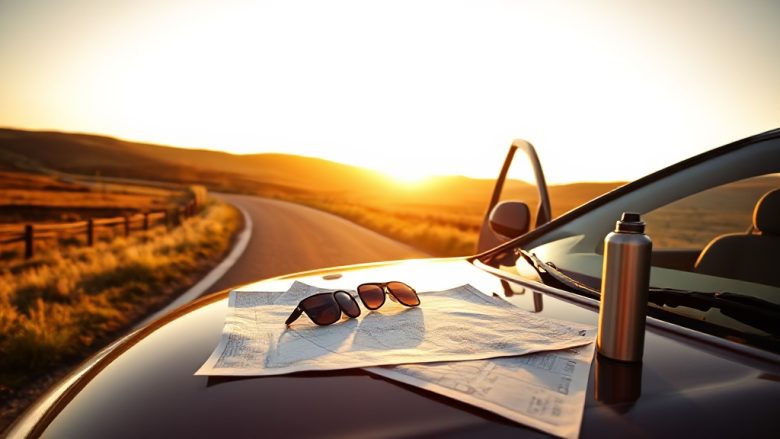
Search for road trip advice and you’ll find two kinds of pages: vague lists that tell you to “be flexible” and “enjoy the journey,” or 4,000-word essays that bury the answer somewhere in paragraph nineteen. Neither helps when you’re standing in your kitchen at 11pm, wondering whether you actually need a spare tyre or how much cash to bring. So this post skips the fluff. It’s a straight FAQ covering the questions first-time road trippers genuinely ask, grouped by theme, answered in plain language. Read the section you need, close the tab, get on the road.
Planning and Route Questions
How far should I drive in one day?
For a first trip, aim for 300 to 400 miles (roughly 480 to 640 km) as a comfortable ceiling. That’s about six hours of actual driving once you account for the fact that motorway miles fly by but country roads crawl. If you’re on scenic back roads, cut that to 200 miles. The number that matters isn’t distance, it’s seat time. Eight hours behind the wheel is a full working day, and you’ll arrive too tired to enjoy wherever you’ve landed.
A practical trick: plan your route around two or three anchor stops rather than a rigid schedule. Book your overnight stays in advance if you’re travelling in peak season, but leave the hours between them loose. Traffic, weather and an unplanned detour to a bakery will all eat into your timeline, and that’s fine.
Do I need to book accommodation ahead?
In summer, at weekends, and anywhere near a national park or coastline, yes. Cheap rooms vanish first, and you don’t want to be hunting for a bed at 9pm in a town with one hotel. Off-season, you can often wing it and get better walk-in rates. A middle path works well: book the first and last nights, and keep one or two nights flexible in between.
What’s the best way to plan a route?
Decide what the trip is actually for. If it’s about the drive itself, pick a road with a reputation and follow it. If it’s about destinations, pick the places and connect them with the least tedious roads. Don’t try to do both at once on a short trip. Also, build in a buffer day. Something will go wrong, and a spare day turns a disaster into an anecdote.
Money and Fuel Questions
How much should I budget for a road trip?
Fuel is usually the smallest surprise. Food and accommodation are the big ones, and they swing wildly depending on whether you’re camping or staying in hotels. As a rough framework for a week-long trip for two people: fuel might run to a few hundred pounds, budget accommodation adds up fast, and food lands somewhere between self-catering and eating out every night. Add a contingency of around 15 to 20 percent. Tyres puncture, parking meters exist, and museum entry fees are never free when you actually want to go in.
Is it cheaper to camp or stay in hotels?
Camping is dramatically cheaper per night, but only if you already own the gear. Buying a tent, sleeping bags and a stove for one trip rarely pays off. If you’re renting equipment, compare the rental cost against a budget hotel before committing. Also factor in campsite fees, which in popular areas aren’t as cheap as people assume.
How do I save money on fuel?
Drive smoothly. Hard acceleration and late braking burn more fuel than steady cruising, and the difference over a long trip is real. Keep tyres at the correct pressure, remove roof racks and bike carriers when you’re not using them, and use cruise control on flat motorways. Filling up away from motorway services saves a surprising amount, too. Supermarket fuel stations on the edge of towns are usually the cheapest option.
Should I carry cash?
Yes, a modest amount. Most places take cards, but rural car parks, small campsites, toll booths and the occasional honesty box still want coins or notes. Keep a small stash somewhere separate from your wallet so you’re not stranded if your card stops working.
Packing and Comfort Questions
What should I actually pack?
Less than you think, and more of the boring stuff. The essentials that people forget: a phone charger and a cable long enough to reach the back seat, a refillable water bottle, a basic first aid kit, painkillers, sunscreen, a torch, and a physical map or downloaded offline maps. Pack layers rather than bulky single items, and bring one pair of shoes you can walk miles in.
One short list worth keeping in the boot permanently: a tyre pressure gauge, jump leads, a warning triangle, a hi-vis vest, and a spare bulb kit. Many European countries require some of these by law, and they cost almost nothing to carry.
How do I keep passengers comfortable?
Agree on the temperature before you set off, and rotate who sits where on long days. Snacks matter more than you’d expect. Hunger turns a scenic drive into a grumpy one. Keep a small bin bag in the car so the footwells don’t become a landfill by day three. And take breaks. A ten-minute stop every two hours keeps everyone human.
What about entertainment and phone signal?
Download playlists, podcasts and maps before you leave. Signal drops in exactly the places you’d most want it, usually mountains and remote coastlines. A power bank per person prevents the classic argument over the single charging cable. If you’re travelling with kids, a tablet with pre-downloaded content is worth its weight in gold.
Safety and Driving Questions
How do I stay safe on a long drive?
Fatigue is the real risk, not other drivers. Take a proper break every two hours, and if you feel drowsy, stop. A twenty-minute nap in a service station beats pushing through. Share driving if you can. Don’t rely on caffeine to fix tiredness; it delays the problem rather than solving it.
Keep your phone mounted and use hands-free navigation. Program the route before you move off, not at a junction. And lock your doors in unfamiliar towns at night, especially at traffic lights.
What if the car breaks down?
Pull as far off the road as you safely can, turn on your hazard lights, and put on a hi-vis vest before getting out. If you’re on a motorway, get everyone behind the barrier, not standing next to the car. Call your breakdown service or the emergency number for the country you’re in. Having your insurance and breakdown details saved offline in your phone saves panic later.
Is it safe to drive at night?
On familiar motorways, it’s fine. On unfamiliar rural roads, it’s a different story. Animals, potholes, cyclists without lights and poorly marked bends all get worse after dark. If you can, plan to arrive before sunset. If you can’t, slow down and accept that the last hour will take longer than the map suggests.
What documents do I need?
For a domestic trip, your driving licence and insurance details. For crossing borders, add your vehicle registration document, a green card if required, and check whether you need an international driving permit. Rules change, so verify the current requirements for each country shortly before you travel rather than assuming last year’s rules still apply.
How do I handle tolls and driving rules abroad?
Research the specific country before you go. Some require a vignette sticker, some charge at barriers, and some use electronic tags. Speed limits, drink-driving thresholds and headlight rules vary more than most people expect. A quick check of the official guidance for each country you’re crossing takes ten minutes and prevents expensive surprises.
FAQ
How many people should go on a first road trip?
Two to four works best. One driver alone gets tired, and large groups slow everything down. Two drivers can split the hours, and four people fit comfortably in most cars with luggage.
What’s the ideal length for a first road trip?
Five to seven days. Short enough that you don’t exhaust yourselves, long enough to actually settle into the rhythm of travelling. A weekend trip often feels like all driving and no arriving.
Do I need special insurance for a road trip?
Check that your existing policy covers the countries you’re visiting and the full duration of the trip. Many standard policies limit cover to a set number of days abroad. If you’re renting a car, the rental company’s cover is often minimal, so consider separate excess insurance.
What’s the one thing first-timers always forget?
A proper break plan. People obsess over routes and packing lists, then drive six hours straight and wonder why the trip felt like a chore. Stop often, eat properly, and treat the journey as part of the holiday rather than something to endure.